TruthFinder launched in March 2015, I've tested a lot of these services over the years, and TruthFinder's interface is consistently one of the cleaner ones — the report layout is logical, the data is organized by category, and it doesn't bury the useful stuff behind unnecessary clicks.
For this review I ran a real search on someone I know — a former colleague whose current address I didn't have. That gave me a genuine benchmark to test against rather than running a vanity search on myself. I'll walk through what I found at each stage, where the data held up, and where it fell short.
Before you start any search here — or on any people-search service — write down everything you already know: full name, approximate age, last known city, and any other identifiers. If the person has a common name you'll get dozens of results, and having that context on hand makes filtering to the right record much faster.
What works well
- Reports include criminal & traffic records, addresses, relatives, and social profiles in one place
- Clean interface — results are laid out in a way that's easy to scan
- Unlimited searches on a subscription — no per-report fees
- Premium data (previously a $17 add-on) now included at no extra cost
- The ability to claim your own report, comment on it, and publicly give records a thumbs up or down
Limitations to know
- Contact details can lag — phone numbers in particular go stale and emails can be outdated. They try to find any email that matches the report subject
- Common names return a long result list that requires manual filtering, but this can be avoided if you know the city they live in or their age
- Initial report lookup takes several minutes, it's not instant
- Addtional cost for things like reverse phone lookup; confirm the current packages before subscribing
How a TruthFinder search works
The search starts simply: enter a first and last name, add a state if you have it, and TruthFinder begins aggregating. The process takes about two minutes — it's pulling from public records, social data, and address history, so instant results aren't realistic. Once it finishes you get a results list, which you narrow by age, location, or other identifiers before opening the full report.
Home page
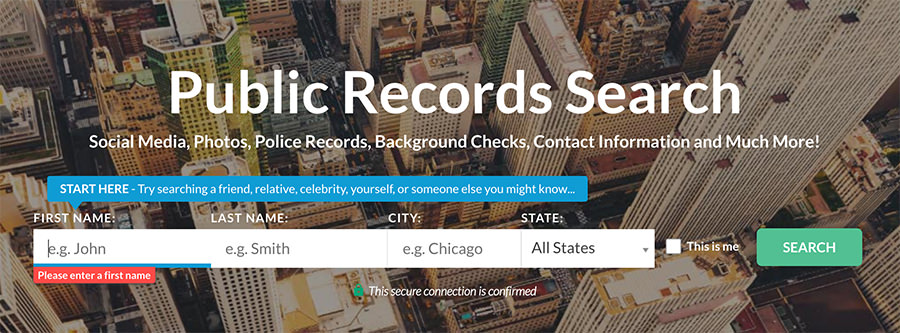
When I first landed on the site I was greeted with a straightforward interface asking me to input the name and location of the person I was trying to locate. I wasn't sure what city he was currently living in so I left that field blank — it's optional.
Search results page
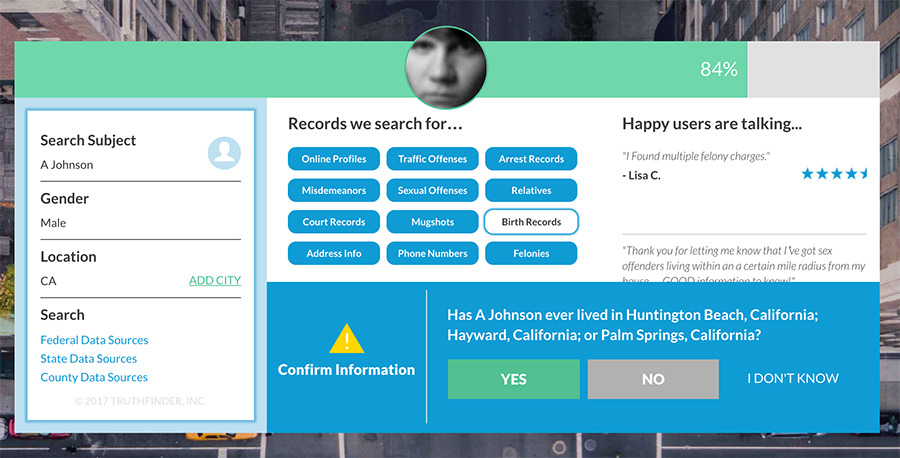
After entering the name and state, my search was under way. The processing takes a couple of minutes, but given the volume of sources TruthFinder is pulling from, that's expected. As the search progressed I had to answer a couple of questions to help narrow down the results. When it finished, it turned up a few dozen results. From the search results page you can narrow further with additional information, which brought me to the report I was looking for.
What the report covers
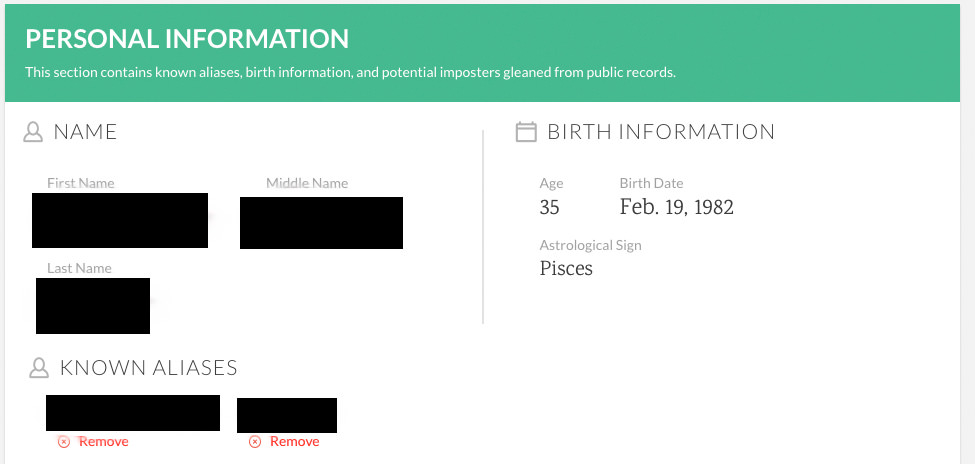
The report itself was detailed. It started with basic info — name, aliases, and birth date. In the screenshots below I've obscured some identifying information.
Location history
This is one of TruthFinder's stronger sections. The address history went back over a decade and included current and recent addresses. Each address entry can be expanded into a location report that includes neighbors and current residents. If you're trying to establish where someone lives now or has lived recently, this is the section to focus on.
Contact information
A mixed result in my testing, which is typical for this data category across all services. The email addresses were current and included a "valid since" timestamp. The phone numbers were less reliable — one listed number was years out of date. Phone data ages faster than address data, and no aggregator has fully solved that problem.
Criminal and traffic records
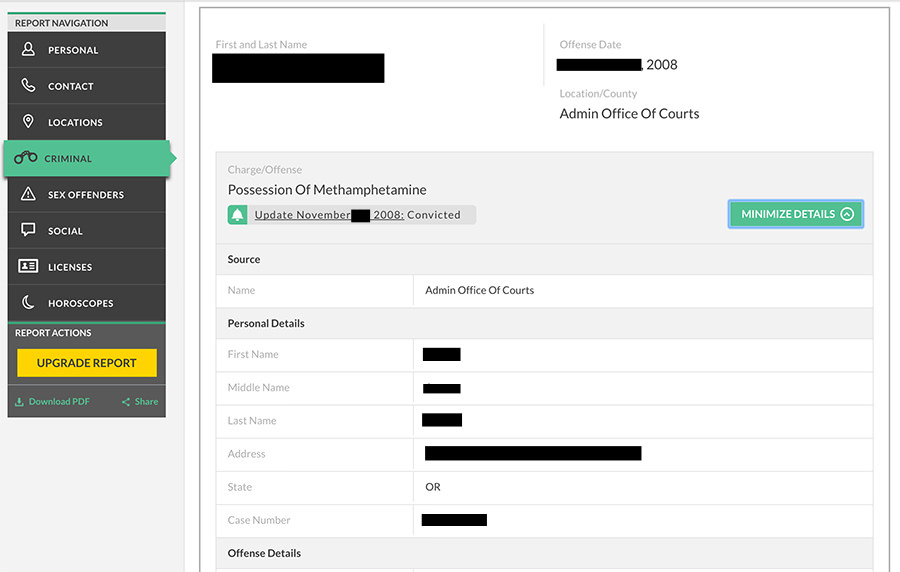
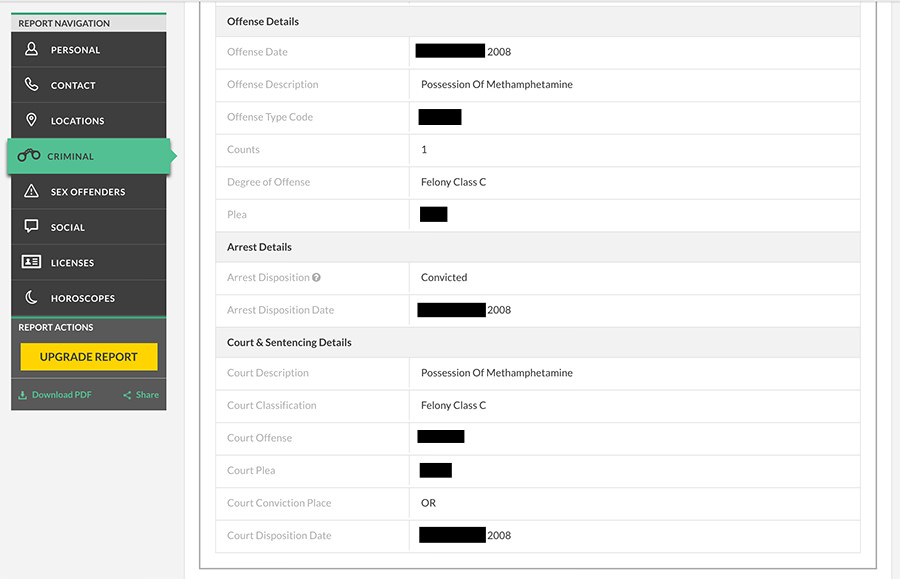
This section surprised me during testing. I ran a search on someone I considered a straightforward subject, and the criminal and traffic records section surfaced a felony drug charge from another state — with conviction details and the plea that was entered. The data was laid out clearly: charge, jurisdiction, disposition. I'd cross-reference anything serious against official court records before acting on it, but as a starting point this level of detail is genuinely useful. For more on what's typically available through official channels, see our guide to criminal record searches.
Relatives and associates
TruthFinder maps out known relatives and associates, which is useful when you're trying to find someone's relatives or verify a connection. In my test the relatives section correctly identified family members I could confirm independently.
Social profiles
The social section pulls across major platforms — Facebook, LinkedIn, Twitter — and in some cases surfaces accounts on smaller networks and forums. It found a profile I didn't already have on the subject, which was a useful data point for cross-referencing identity. This is also relevant if you're trying to identify someone online.
Additional features
Search by email, phone, or address
Beyond name searches, TruthFinder lets you search by email address, phone number, or by a physical address to see current and past residents. The address lookup is included with the basic people report subscription and is useful if you want context on a location rather than a specific person. Email address and phone number lookups cost additional money.
Report monitoring
You can setup monitoring on any report (for an additional fee) so that you're notified when new information is added. For ongoing research, checking in on someone over time rather than a one-time lookup, this is a genuinely useful feature that only some competing services offer.
PDF downloads
Reports can be downloaded as PDFs for a small additional fee per month. The PDFs are well formatted and usable as reference documents. Confirm the current fee on their site as pricing details change periodically.
Pricing
| Plan | Cost |
|---|---|
| 1 month | ~$28.33/month |
| 3 months | ~$22.44/month (billed quarterly for $67.32) |
| 6 months | ~$19.64/month (billed quarterly for $117.84) |
TruthFinder's pricing fluctuates periodically. The figures above reflect what was current at time of writing but may have changed. Confirm the current rate on their site before subscribing. All three plans include unlimited name and address searches.
How TruthFinder compares
TruthFinder sits at #2 in my rankings behind Instant Checkmate, which edges it out on simplicity and slightly on price. That said, the gap is narrow. TruthFinder's interface is clean and the report layout is simple to navigate for first-time users. If you're running occasional searches and want results that are straightforward to read, TruthFinder is a strong choice. If you're doing more intensive research across name-based searches or need the broadest possible record coverage, compare both before deciding.
Neither service should be used for employment screening, tenant decisions, or any other FCRA-regulated purpose — see the notice at the top of this page.
Bottom line
TruthFinder does what it advertises. The criminal & traffic record coverage is better than most services, the interface is well designed, and the report monitoring feature adds genuine ongoing value. The contact data — phone numbers in particular — lags behind the address history in freshness, which is a known limitation across this category. For researching a person online or getting a fuller picture before a meeting, it's a solid tool. For the deepest possible record coverage I'd still run a parallel check through Instant Checkmate, but TruthFinder alone covers the majority of use cases.
Frequently asked questions
How current is the data in TruthFinder reports?
It varies by data type. Address history and criminal records tend to be reasonably current in my testing, recent addresses matched what I could independently verify. Phone numbers age faster and are the least reliable field. Email addresses fall in between: TruthFinder shows a "valid since" timestamp which gives you some sense of how current each entry is. For any critical piece of information, cross-reference against an official source before acting on it.
Does TruthFinder require a subscription or can I pay per report?
TruthFinder operates on a subscription model. You pay monthly, quarterly, or semi-annually and run unlimited searches during that period. There is no per-report option for standard searches. PDF downloads and report monitoring cost an additional fee per month. If you only need to run one or two searches, factor in whether a full subscription is cost-effective for your situation.
Can I use these searches for jobs, housing, or insurance decisions?
No. The services discussed on this page are not consumer reporting agencies and the information here is not a consumer report. They should not be used for employment, tenant screening, insurance underwriting, credit, or any other purpose regulated by the Fair Credit Reporting Act.
Ready to run a search?
Visit TruthFinderNot for employment, tenant screening, insurance, credit, or any FCRA-regulated purpose.